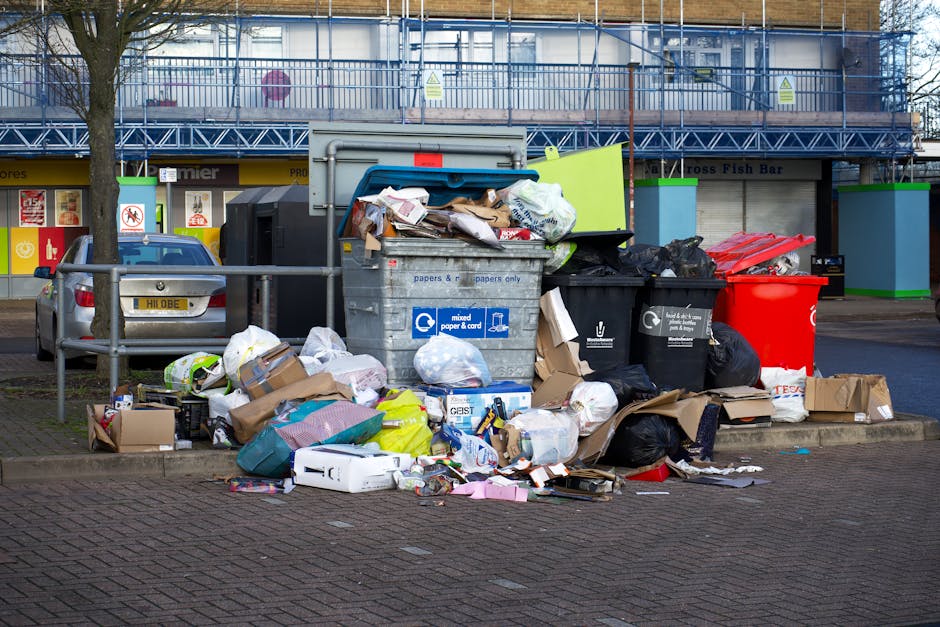
What to know about access issues for Twickenham rubbish clearance
If you are arranging rubbish clearance in Twickenham, access is often the part that decides whether the job feels smooth or turns into a frustrating shuffle of bins, bags, and blocked hallways. Narrow side returns, shared entrances, permit parking, basement steps, awkward garden gates, and top-floor flats all change the way a clearance needs to be planned. That is exactly why understanding What to know about access issues for Twickenham rubbish clearance matters before anyone turns up with a van. A little preparation saves time, reduces lifting risks, and makes the whole process feel less chaotic. And let's face it, nobody wants rubbish sitting in the hallway longer than it has to.
In this guide, you will learn how access issues affect the job, what to check before booking, common mistakes to avoid, and how to make the clearance quicker and safer. We will also cover practical tools, local realities, and a few calm, sensible best practices that can make a surprisingly big difference.
Why access issues matter
Access sounds simple until you are standing at the foot of a narrow stairwell with a wardrobe that is somehow both heavier and less cooperative than expected. In Twickenham, many homes and commercial spaces sit on older streets, have limited parking, or include tight routes through front gardens, shared passageways, or upper-floor flats. That means access is not a side issue. It is often the main factor that shapes the whole clearance.
Why does this matter so much? Because access affects nearly everything: how long the job takes, how many people are needed, what lifting equipment may be helpful, whether items can be removed safely, and whether the vehicle can park close enough to the property. If the team has to carry bulky waste a long distance, the effort goes up quickly. So does the chance of damage or delay.
There is also a customer-experience angle here. A clear access plan reduces surprises. If you have ever watched a sofa being rotated three times in a hallway while someone mutters, "I thought this would fit," you already know the value of a proper check beforehand. To be fair, most access problems are not dramatic. They are just inconvenient. But inconvenience is enough to slow everything down.
Expert summary: the best rubbish clearance jobs are rarely the ones with the most dramatic waste piles; they are the ones where access has been thought through before the van arrives.
For some households, access planning is the difference between a same-day clearance and a job that needs extra time or a different method. For businesses, it can also affect continuity. A cluttered office or stockroom is one thing; a clearance team unable to get through a loading bay or stairwell is another. If your project involves commercial spaces, it can help to look at business waste removal as part of a broader plan rather than a one-off collection.
How access issues affect clearance work
Access issues influence rubbish clearance in a few practical ways. First, they affect the route. A direct path from the property to the vehicle is ideal. If that is not possible, the team may need to carry items around corners, through communal areas, down stairs, or across uneven ground. Each extra movement adds time and effort.
Second, access affects safety. Heavy items can be awkward in tight spaces. Mattresses bend. Wardrobes catch on bannisters. Fridges are stubborn. Old builders' waste bags can split if they are dragged rather than carried. Good access planning helps avoid injury to people and damage to walls, flooring, glass, or doors.
Third, access can change the removal method. A property with wide drive access and a clear front path may be easy to load directly. A first-floor flat with no lift may need a different approach, with smaller loads and more careful handling. That is why a quick description of your property type helps. A flat clearance and a house clearance are often similar in principle, but the logistics can be very different. For example, a flat with communal stairs may need more time than a ground-floor home with side access, even if the total amount of waste is the same.
Twickenham brings its own mix of housing layouts, and that matters. Some roads are straightforward, but others can be tight at busy times or awkward for large vehicles. If the job is connected to a loft, garage, or garden clear-out, the actual distance from the pile to the van may be longer than it first looks. The details matter. They really do.
A useful way to think about it is this: access is the hidden part of the workload. You can see the waste pile. You cannot always see the effort required to get it out safely.
Key benefits and practical advantages
Good access planning may not sound exciting, but it pays off in very real ways. It keeps the clearance calm, quicker, and easier to price properly. It also helps avoid that awkward moment where the team arrives and everyone realises the sofa is not going through the front door without some thought.
- Better time planning: when access is clear, the job can be scheduled more accurately.
- Safer lifting: fewer tight turns and obstacles mean lower risk of strain or accidents.
- Reduced damage risk: walls, bannisters, floors, and door frames are less likely to be scraped.
- Clearer pricing: access information helps estimates feel more realistic.
- Smoother customer experience: less disruption for you, neighbours, or staff.
- More efficient loading: the crew can focus on removal rather than improvising a route.
There is a subtle but important benefit too: access planning often helps you sort the job into the right service type. A simple furniture pickup may be enough for one property. Another might need a full home clearance because access to the loft, shed, and back room all adds complexity. If you are clearing bulky household items, services such as furniture clearance or furniture disposal may fit better than trying to force everything into one generic plan.
It can also improve sustainability outcomes. When people have time to separate reusable items from general waste, less useful material gets damaged on the way out. That makes it easier to direct items toward recycling or reuse where appropriate. If that side of the process matters to you, have a look at recycling and sustainability before booking.
Who this is for and when it makes sense
Access issues matter to more people than you might think. They are not just a concern for large clear-outs or awkward older buildings. In fact, the situations below are the ones where a bit of foresight saves the most hassle.
- Flat owners and tenants: especially where there are stairs, lifts, security doors, or shared hallways.
- Homeowners with side access or rear gardens: useful to know whether waste can be moved directly or needs to come through the house.
- Landlords and letting agents: property turnover can be tight, so access clarity avoids delays between tenants.
- Businesses: office corridors, loading restrictions, and restricted parking can all complicate removals.
- Anyone clearing bulky items: mattresses, sofas, fridges, wardrobes, and builders' debris are the usual culprits.
- People dealing with cluttered spaces: when rooms are heavily packed, access routes may be narrower than they look at first glance.
It makes sense any time a clearance involves more than a few bags. If you have to ask yourself, "Will this fit through there?" you are probably already in the right mindset. That sounds obvious, but honestly, it is where many problems begin.
There are also a few job types where access planning is especially useful. A loft clearance with a narrow staircase, a garage clearance with limited driveway space, or a garden clearance through a narrow side gate can all need a more careful approach. Even a straightforward home clearance can become fiddly if the only route passes through a busy living room or around a delicate staircase.
Step-by-step guidance
If you want the clearance to run smoothly, here is a practical way to prepare. Nothing fancy. Just the sort of checks that save time and reduce stress.
- Map the route from waste to vehicle. Walk it slowly. Look for tight turns, low ceilings, steps, doors that swing the wrong way, and anything fragile.
- Measure the awkward items. A tape measure is more useful than people think. Width and height are often the problem, not weight alone.
- Check parking or stopping space. If a vehicle cannot get near the property, allow for extra carrying distance. That can make a big difference.
- Spot shared areas or restrictions. Communal hallways, lift bookings, security codes, and resident rules should be noted in advance.
- Separate items that need special handling. Fridges, paint, chemicals, or electricals may need different treatment. If hazardous materials are involved, check the right route before moving them.
- Clear smaller obstacles first. Shoes, plant pots, bicycles, laundry baskets, and loose cables often slow down the route more than the big items do.
- Tell the clearance team about anything unusual. A broken lift, a steep path, a locked gate, or a low archway can all change the plan.
- Confirm what happens if access is tighter than expected. It is worth understanding whether extra time, labour, or a different vehicle arrangement might be needed.
One useful habit: stand at the item, then look all the way to the exit before anyone lifts anything. If you can picture the route clearly, you are already ahead. If not, pause and think again. That pause can save a lot of swearing later, which is always nice.
For larger household clear-outs, it can help to think in zones. Start with the heaviest items, then the most awkward, then the loose waste. If the property includes a loft, basement, or garage, treat those as separate access points rather than assuming everything will move the same way.
Expert tips for better results
After enough clearances, a pattern emerges. The jobs that run well tend to share the same habits. Nothing glamorous, just solid preparation.
Tip 1: Send photos from the route, not just the waste. Photos of the staircase, gate, driveway, parking space, and hallway are often more valuable than a picture of the rubbish itself. A lot of people forget this part.
Tip 2: Be honest about clutter. If there is a clear route only after some light moving around, say so. It is better to admit that the hall is a bit tight than to surprise everyone with it on arrival.
Tip 3: Think about timing. Early morning can sometimes be easier for access and parking, particularly in busy residential streets. Midday may be fine too, but local traffic and neighbours' routines can affect things. A 10-minute delay here and there adds up.
Tip 4: Protect the route before the team arrives. A rolled carpet, old sheet, or protective cover can help if items are being moved through clean internal areas. Not always essential, but handy.
Tip 5: Watch the item shape, not just the weight. A lightweight wardrobe can be harder to turn than a dense box of bricks. Weirdly, that is just how it goes.
Tip 6: Ask about disassembly if needed. Some wardrobes, bed frames, desks, or shelving units are easier to remove in parts. Taking them apart can open up a route that otherwise looks impossible.
Tip 7: Keep neighbours in mind. Communal access, shared driveways, and narrow streets benefit from a little courtesy. A quick heads-up can prevent avoidable friction.
For items with specific disposal needs, it may help to look at dedicated services. For example, fridge and appliance removal can be more appropriate than a general load if white goods need special handling. Likewise, hazardous waste disposal is the right path for anything that should not be mixed with ordinary rubbish.
Common mistakes to avoid
Most access problems are avoidable. The trouble is, people often only notice them when the clearance is already under way. A bit like realising the suitcase is too small after you have packed half the wardrobe.
- Underestimating stair difficulty: narrow turns, bannisters, and landings matter more than people expect.
- Forgetting to mention parking limits: a van space that looks "near enough" may not actually be practical.
- Ignoring communal rules: some buildings have strict access times or loading restrictions.
- Leaving clutter in the route: small items often create the biggest trip hazards.
- Not measuring bulky furniture: if the item has to be twisted, turned, or carried upright, dimensions matter.
- Assuming every item can be removed the same way: a sofa, a boiler, and a desk do not all behave the same. Sadly.
- Not flagging broken or awkward features: damaged steps, stuck doors, or loose handrails should be mentioned early.
Another common mistake is treating access as someone else's problem. In reality, the more information you give upfront, the better the plan becomes. That is not just convenient; it is respectful of the team doing the lifting and the property itself.
One more thing: avoid leaving the clear-up until the last minute if a tenancy change, sale, or office handover is involved. The tighter the deadline, the less room there is for access complications. And access complications do like to appear at the worst moment, don't they?
Tools, resources and recommendations
You do not need a van full of specialist kit to think clearly about access, but a few basic tools help a lot.
- Tape measure: for doors, stair widths, furniture dimensions, and tight bends.
- Phone camera: photos and videos are often the easiest way to explain awkward access.
- Notebook or checklist: useful for noting gates, codes, parking issues, or lift restrictions.
- Basic protective items: gloves, sturdy shoes, and route protection where needed.
- Disassembly tools: only if items can be safely taken apart before removal.
There are also some helpful service pages and related resources if your clearance includes specific types of waste. For example, loft clearance is useful when the access point is an upper storey and the staircase is the main challenge. garage clearance can help when space is cluttered but access is direct. If you are dealing with a garden route or side return, garden clearance may be the closest fit.
For people comparing services, it can also help to read about pricing and quotes so you understand how access can influence the estimate. That way you are not guessing why one job costs more than another that looks similar on the surface.
Law, compliance, standards and best practice
Access issues are not just a convenience matter. They can overlap with safety, waste handling, and responsible disposal. In the UK, rubbish clearance should be carried out in a way that protects people, property, and the environment. That means sensible lifting practices, careful handling of restricted items, and an awareness of what can and cannot be mixed into a load.
For ordinary household waste, the key best-practice point is simple: sort items properly and do not force everything into one pile if some of it needs separate handling. Items such as electricals, fridges, paint, oils, batteries, sharp waste, or anything potentially hazardous require more care. If you are unsure, it is safer to pause and ask before moving it.
Access also links to workplace safety where crews are entering homes, flats, or business premises. Clear walkways, honest communication about hazards, and avoiding rushed lifting all reduce risk. If you are arranging a clearance on behalf of a business, office, or landlord, it is sensible to make sure the chosen method aligns with your own internal safety expectations too. For background reading on responsible operating standards, the site's health and safety policy and insurance and safety information may also be useful.
There is one more compliance point worth noting. If clearance involves confidential papers or business records, access planning may need to include secure handling and limited movement through shared spaces. A good example is office or back-room clearances where privacy matters. In those cases, services such as confidential shredding can be relevant.
Best practice is not about overcomplicating the job. It is about removing avoidable risk. That is the heart of it.
Options, methods and comparison table
There is more than one way to handle a clearance when access is awkward. The best option depends on the route, the size of the waste, the property type, and how quickly the job needs to be completed.
| Method | Best for | Pros | Trade-offs |
|---|---|---|---|
| Direct carry to vehicle | Clear front or rear access, short carrying distance | Fast, efficient, usually simplest | Relies on parking and a clean route |
| Split-load removal | Flats, stairs, or mixed waste piles | Easier to manage in sections, safer for tight spaces | Can take longer overall |
| Item disassembly first | Large furniture or oversized items | Improves movement through narrow routes | Requires more preparation |
| Specialist handling for restricted items | Appliances, hazardous items, or sensitive materials | Better compliance and safer disposal | May require separate arrangements |
| Zone-by-zone clearance | Lofts, garages, sheds, and heavily cluttered homes | Organised, less chaotic, easier to supervise | Not always the fastest option |
For many people, the right answer is a mix of methods. A wardrobe may need disassembly, a fridge may need separate handling, and general rubbish may be removed in stages. That is normal. In fact, it is often the sign of a well-planned job rather than a messy one.
Case study or real-world example
A fairly typical Twickenham scenario goes like this. A resident in a first-floor flat wants to clear out an old sofa, two bookcases, several bags of mixed household waste, and a broken chest of drawers. On paper, it looks straightforward. Then the details arrive: the building has a narrow shared staircase, no lift, limited parking, and a front entrance that stays busy in the morning.
The first step is to check the route from flat to street. The staircase has a bend halfway down, which means the sofa will not travel upright all the way. So the team plans for a two-person carry, clears the landing in advance, and removes the chest of drawers in smaller sections. The bookcases are light, but they still need to be angled carefully. Parking is arranged as close as possible, and the bags are loaded last once the larger items are out of the way.
What changed the outcome? Not brute force. Planning. The job finished faster because the access issues were identified early, the right sequence was chosen, and nobody had to improvise under pressure. That is the part people often miss. Clearance work is not just about lifting. It is about route management.
Another small detail helped too: the resident sent a few photos of the stairwell beforehand. Nothing fancy, just a couple of phone shots. Those photos probably saved fifteen minutes of uncertainty, maybe more. Small thing, big difference.
Practical checklist
Before your clearance appointment, run through this checklist. It is simple, but it catches most of the usual problems.
- Have I checked the route from each item to the exit?
- Are there any tight turns, steps, low ceilings, or narrow doors?
- Do I know whether parking is nearby and realistic?
- Have I mentioned any communal access rules or building restrictions?
- Are large items likely to need disassembly?
- Have I separated items that need specialist handling?
- Are hallways, stairs, and pathways clear of small obstacles?
- Have I shared photos or measurements of the awkward bits?
- Do I know if the job involves a loft, garage, basement, or garden route?
- Have I allowed enough time in case access is slower than expected?
If you can tick most of those off, you are in a good place. Not perfect, maybe. But good enough for the job to run smoothly, which is what matters.
Conclusion
Access issues can make or break a rubbish clearance in Twickenham. The good news is that most of them are easy to manage once you know what to look for: tight staircases, parking limitations, shared entrances, awkward furniture, and special waste that needs separate care. A little planning goes a long way. Very long, actually.
If you remember only one thing from this guide, make it this: the waste pile is only half the story. The route out matters just as much. Measure where needed, send photos if you can, mention any restrictions early, and treat access as part of the job rather than an afterthought. That one change usually leads to a calmer, safer, and faster clearance.
And if you are still uncertain, that is completely normal. A quick conversation, a few clear photos, and a proper look at the route often remove most of the guesswork. It is one of those jobs where a little clarity at the start saves a lot of effort later. That is good news, really.
Get a free quote today and see how much you can save.
Frequently Asked Questions
What are the most common access issues for rubbish clearance in Twickenham?
The most common issues are narrow staircases, limited parking, shared entrances, awkward garden routes, and bulky items that do not fit through standard doors without care.
How do I know if my sofa or wardrobe will fit out of the property?
Measure the item and the tightest points on the route, especially doorways, stair turns, and landings. If it needs twisting or carrying upright, mention that early.
Does access affect the price of rubbish clearance?
Often, yes. Poor access can increase the time and labour needed, which may affect the quote. Clear information helps produce a more accurate price.
Should I take photos before booking a clearance?
Yes, if you can. Photos of the route, stairs, parking area, and bulky items are usually more helpful than a description alone.
What if my flat has no lift?
That is common and usually manageable. The team may plan for extra carrying time, smaller loads, or dismantling of furniture if needed.
Can rubbish be removed through a communal hallway?
Usually yes, but it depends on building rules and whether the route is safe and clear. Communal areas should be treated carefully to avoid damage or disturbance.
What should I do with hazardous or restricted waste?
Do not mix it into general rubbish. Items like chemicals, paint, batteries, or certain electricals may need separate handling or a specialist route.
Is it better to disassemble furniture before the clearance?
Sometimes. If a large item is too awkward for the route, dismantling it can make removal much easier and safer. Check before taking anything apart.
How much notice should I give if access is difficult?
The more notice, the better. Even a short heads-up about stairs, parking, or gate codes can make a big difference to planning.
What happens if the access is worse than expected on the day?
The team may need to adjust the plan, take more time, or use a different approach. Honest communication before arrival helps avoid surprises.
Can access issues delay a same-day clearance?
Yes, they can. If the route is tight or parking is limited, the job may take longer than expected, so same-day timing is more likely to be affected.
Are access problems different for offices and homes?
They can be. Offices often involve loading bays, corridors, shared lifts, or building schedules, while homes usually involve stairs, gardens, or narrow internal routes. The principle is the same, though: plan the route first.
If you are weighing up next steps, start with the route, the item size, and the parking situation. Those three details answer more questions than people expect. A careful start tends to make the rest of the job feel much lighter, and that is a relief when your day is already full enough.